CFxD 2.15.5 Released

November 4, 2026

A new CFxD update is now available.

Version 2.15.5 introduces new turbulence and radiation modeling capabilities, along with significant improvements to post-processing and overall usability. This release adds the SST-SAS turbulence model, the P1 radiation model, and y+ visualization for near-wall mesh assessment.

The update also extends transient post-processing capabilities, improves the graphical user interface, and includes updates to the manual and integrated help system.

What is new in CFxD 2.15.5

  • All (IMP): GUI usability improved.
  • Setup (NEW): SST-SAS turbulence model implemented.
  • Setup (NEW): P1 radiation model implemented.
  • Result (NEW): Wall y+ visualization added.
  • Result (NEW): Transient post-processing capabilities extended.
  • Manual (IMP): Documentation updated.
  • Help (IMP): Integrated help system updated.

Major new capabilities

SST-SAS Turbulence Model

The new Shear Stress Transport – Scale-Adaptive Simulation (SST-SAS) model extends CFxD turbulence modeling capabilities. It allows the simulation to resolve larger unsteady turbulent structures when the flow conditions and mesh resolution permit, providing an alternative to conventional RANS models for complex transient flows.

P1 Radiation Model

The implementation of the P1 radiation model expands CFxD thermal simulation capabilities by accounting for radiative heat transfer in participating media. This model is particularly useful for applications involving radiation absorption and emission within fluid regions.

Wall y+ Visualization

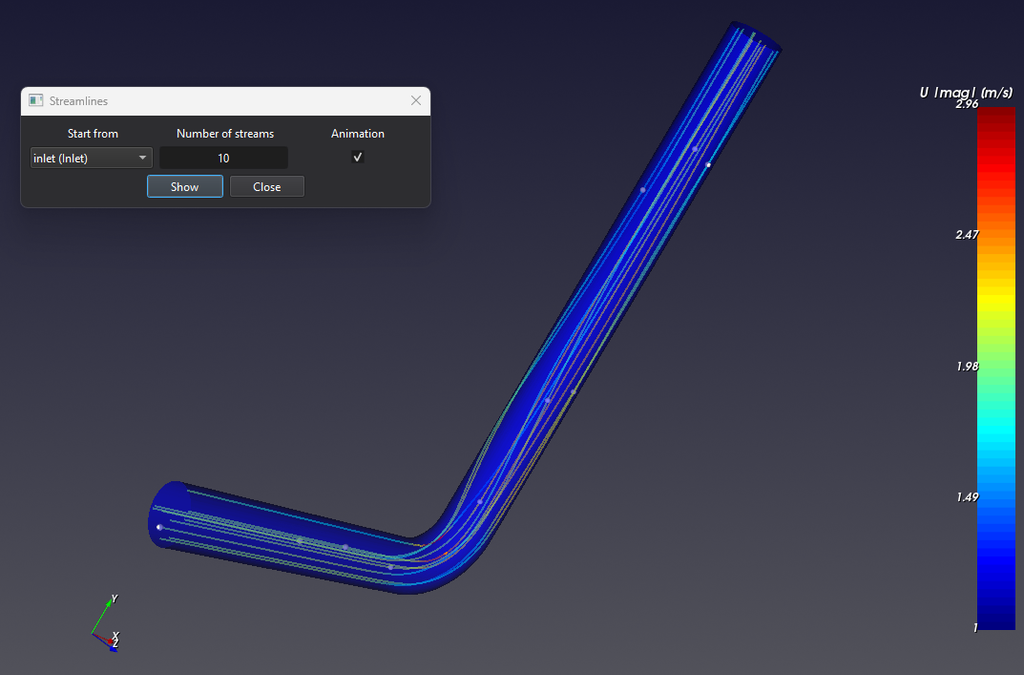
The new y+ visualization feature allows users to evaluate near-wall mesh resolution directly in the Results section. This helps assess the suitability of the boundary-layer mesh for the selected turbulence model and identify regions requiring additional mesh refinement.

Extended Transient Post-Processing

Transient post-processing capabilities have been extended, providing greater flexibility for analyzing time-dependent simulation results and examining the evolution of flow variables.

GUI and Documentation Improvements

Further interface improvements make the CFxD workflow more convenient and intuitive. The manual and integrated help system have also been updated to reflect the latest features.
CFxD 2.14.7 Released

October 29, 2026

A new CFxD update is now available.

Version 2.14.7 introduces several major new simulation capabilities, significantly expanding the range of physical phenomena that can be modeled in CFxD. This release adds support for acoustic simulations, two-phase flow using the Volume of Fluid (VOF) method, and combustion modeling.

The update also introduces an improved Physics panel in the Setup section, extends geometry editing capabilities, and includes updates to the manual and integrated help system.

What is new in CFxD 2.14.7

  • Geometry (IMP): Surface division using lines and curves implemented.
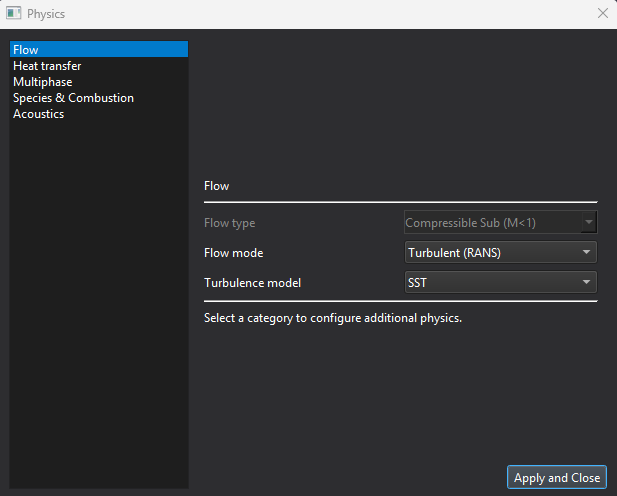
  • Setup (IMP): New Physics panel introduced for improved simulation configuration.
  • All (NEW): Acoustic model implemented.
  • All (NEW): Two-phase Volume of Fluid (VOF) model implemented.
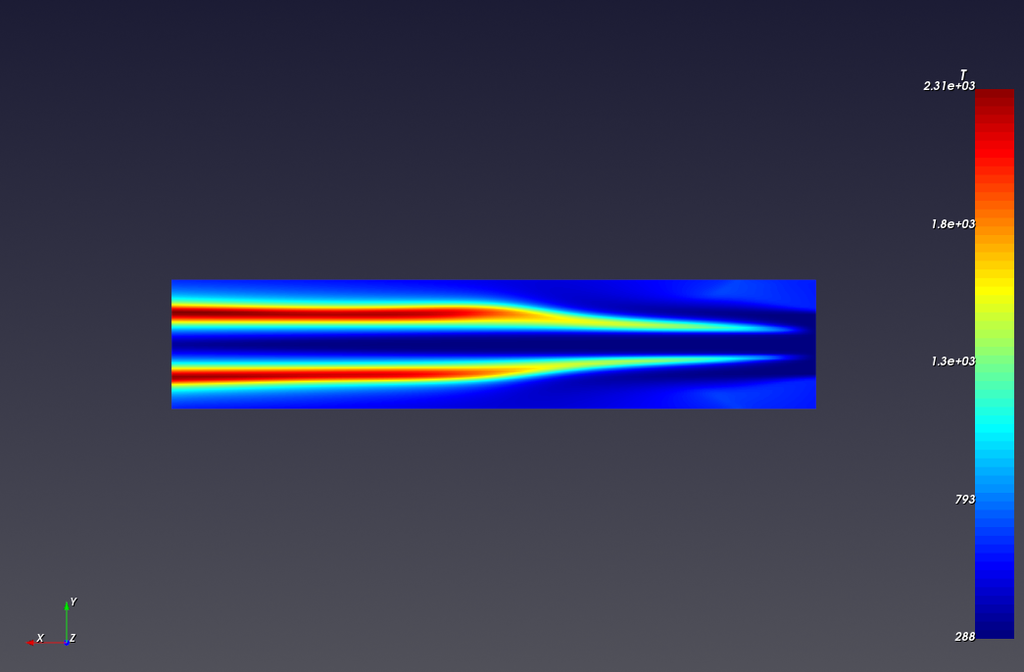
  • All (NEW): Combustion model implemented.
  • Manual (IMP): Documentation updated.
  • Help (IMP): Integrated help system updated.

Major new capabilities

Acoustic Modeling

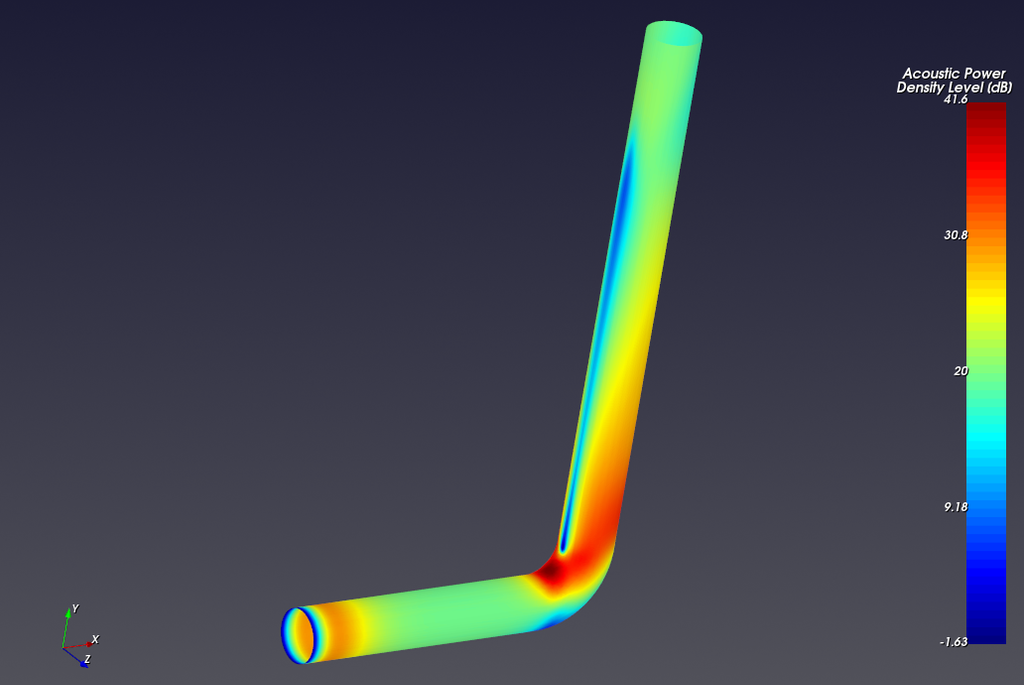
The new acoustic model extends CFxD capabilities to simulations involving acoustic phenomena, providing additional tools for analyzing sound-related behavior in fluid systems.

Two-Phase Flow (VOF)

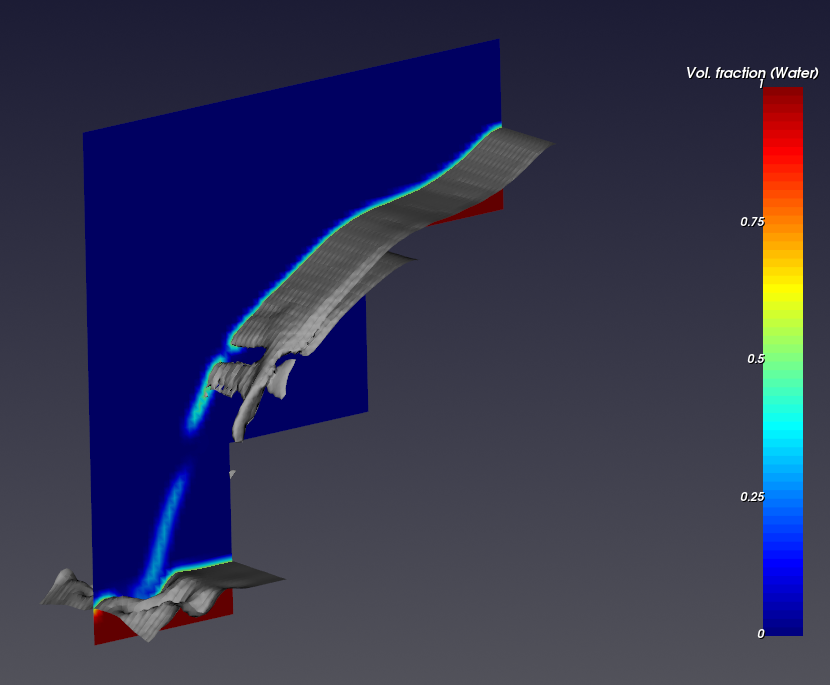
The implementation of the Volume of Fluid (VOF) model enables simulations of two immiscible fluids with a distinct interface, expanding CFxD applications to free-surface flows and other two-phase flow problems.

Combustion Modeling

The new combustion model introduces capabilities for simulating reacting flows involving fuel and oxidizer mixtures, extending CFxD into combustion-related engineering applications.

Geometry and Setup Improvements

Surface division using lines and curves provides greater flexibility in geometry preparation. The new Physics panel improves the organization of simulation models and simplifies the selection and configuration of physical processes.

CFxD 2.13.5 Released — October 22, 2026

We are pleased to announce the release of CFxD 2.13.5, introducing new simulation capabilities and improvements to existing physical models.

What’s New

  • Simple Fan Model (NEW): Implemented a simplified fan model, allowing users to simulate fan-induced flow without explicitly modeling rotating blades.
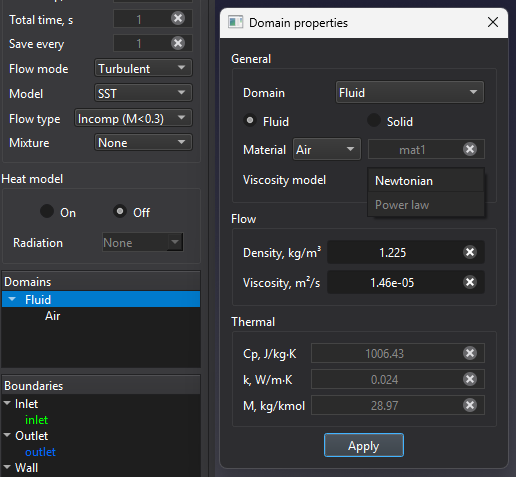
  • Non-Newtonian Fluids (NEW): Added support for non-Newtonian fluid simulations, extending CFxD capabilities to fluids with shear-dependent viscosity.
  • Porous Model (IMP): Extended the porous media model to provide greater flexibility in modeling flow resistance through porous regions.
  • User Manual (IMP): Updated to cover the latest features and improvements.
  • Integrated Help (IMP): Updated with documentation for the new simulation capabilities.

CFxD (ver. 2.12.7, October 19, 2026)

A new CFxD update is now available.

Version 2.12.7 introduces improvements to mesh generation and quality assessment, along with expanded thermal boundary condition capabilities. This release includes enhancements to surface mesh refinement, improved mesh quality evaluation, and the implementation of a new wall heat flux boundary condition. The manual and integrated help system have also been updated.

What is new in CFxD 2.12.7

  • Mesh (IMP): Surface mesh refinement capabilities extended.
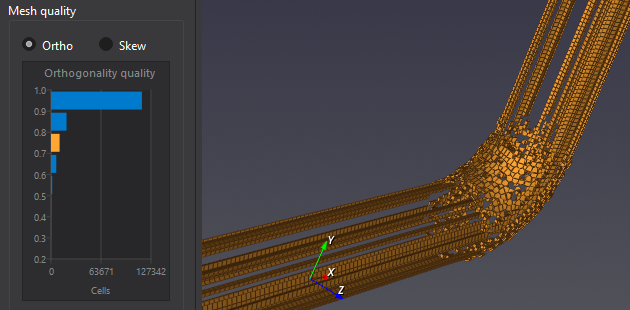
  • Mesh (IMP): Mesh quality assessment improved.
  • Setup (NEW): Wall heat flux boundary condition implemented.
  • Manual (IMP): Documentation updated.
  • Integrated Help (IMP): Help content updated.

The extended surface mesh refinement capabilities provide greater control over mesh generation, while the improved mesh quality assessment helps users evaluate mesh characteristics more effectively.

The new wall heat flux boundary condition allows users to specify heat flux directly on wall surfaces, expanding the range of thermal simulations supported by CFxD.

CFxD (ver. 2.12.00, October 11, 2026)

CFxD 2.12.00 Released
October 11, 2026

A new CFxD update is now available.

Version 2.12.00 focuses on Geometry and Results workflow improvements. This release extends the Geometry entity tree, improves the Streamlines feature, adds a new Isosurfaces feature for post-processing, and fixes unit display issues in the Post dialog.

What is new in CFxD 2.12.00

  • Geometry (IMP): Geometry entity tree extended
  • Result (BUG): Post dialog units fixed
  • Result (IMP): Streamlines feature extended
  • Result (NEW): Isosurfaces feature added

The new Isosurfaces feature expands post-processing capabilities by allowing users to visualize surfaces of constant variable values. The extended Streamlines feature provides more flexibility for flow visualization, while the improved Geometry entity tree makes geometry organization clearer and more convenient.

CFxD (ver. 2.11.06, July 12, 2026)

CFxD 2.11.06 Released
July 12, 2026

A new CFxD update is now available.

Version 2.11.06 introduces support for high-speed flow simulations with Mach numbers greater than 1, extending CFxD capabilities for compressible flow applications. This release also adds wall roughness settings in the Setup and Solution workflow, improves the user interface, updates the manual, and introduces a log-scale option for the convergence graph.

What is new in CFxD 2.11.06

  • All (NEW): High-speed model implemented for M > 1 flows
  • Setup/Solution (NEW): Wall roughness introduced
  • General (IMP): Manual updated
  • General (IMP): UI improved
  • Solution (NEW): Log-scale option implemented for the convergence graph

The new high-speed flow model expands the range of compressible flow cases that can be simulated in CFxD. The addition of wall roughness provides more control over wall boundary modeling, while the new log-scale convergence graph helps users evaluate residual behavior more clearly during the solution process.

CFxD (ver. 2.10.04, July 1, 2026)

A new CFxD update is now available.

Version 2.10.04 introduces the surface-to-surface (S2S) radiation model, extending CFxD thermal simulation capabilities for radiative heat transfer between surfaces. This release also includes updates to the manual, tutorials, and integrated help, together with further GUI improvements and extended convergence control options in the Solution stage.

What is new in CFxD 2.10.04

  • General (IMP): GUI improvements
  • General (IMP): Manual updated
  • General (IMP): Tutorial updated
  • General (IMP): Integrated help updated
  • All (NEW): S2S radiation model implemented
  • Solution (NEW): Convergence control extended

The addition of the S2S radiation model expands the range of thermal applications that can be addressed in CFxD, especially for cases where radiative heat exchange between walls is important. The extended convergence control provides greater flexibility in managing the solution process.

Download

CFxD (ver. 2.09.01, June 9, 2026)

A new CFxD update is now available.

Version 2.09.01 introduces several important improvements to performance and workflow. This release includes code optimization, further GUI improvements, a new STEP export option in Geometry, and support for multi-domain conjugate heat transfer (CHT) simulations.

What is new in CFxD 2.09.01

  • General (IMP): Code optimization
  • General (IMP): GUI improvements
  • Geometry (NEW): Export to STEP file added
  • All (NEW): CHT multi-domain support implemented

The addition of STEP export makes it easier to transfer geometry for use in other tools and workflows. The new multi-domain CHT support extends thermal simulation capabilities by allowing conjugate heat transfer analysis across multiple solid domains.

CFxD (June 9, 2026)

CFxD 2.08.06 is now available

Version 2.08.06 delivers a set of refinements aimed at improving the overall user experience. In this release, the manual and tutorials have been updated, and the material library has been improved to support a smoother and more convenient setup workflow.

Included in this update

  • Updated manual
  • Updated tutorials
  • Updated material library

Windows
Available through the updater.

New CFxD Benchmark Comparison Report

A new CFxD Benchmark Comparison Report is now available in the Documentation section.

The report presents a technical comparison between CFxD and Ansys Fluent for representative CFD applications, including:

  • Internal and external flows
  • Forced and natural convection
  • Compressible subsonic flow
  • Porous-media resistance
  • Transient vortex shedding
  • Non-reacting gas mixing
  • Rotating flow using MRF
  • Conjugate heat transfer

The report compares velocity, pressure, temperature, and species-distribution results using contours, profiles, and selected quantitative parameters.

This document is intended as a preliminary software-to-software benchmark demonstrating the consistency of CFxD results across a range of engineering flow and heat-transfer cases.